Cube 3D is an artificial intelligence model that is developed by Roblox Corporation. It is open source and available on GitHub and Hugging Face. In March 2026, Roblox announced Cube 3D as a mesh generation model that takes text input. In February 2026, Roblox released 4D creation in a public beta, allowing embedding Cube 3D into Roblox games. Cube 3D is integrated into Roblox Studio and its API, and supports two modes of 4D creation. == History == In March 2025, Roblox announced Cube 3D as a mesh generation model that takes text input. Its first feature was an API that allows mesh generation. That month, it was made open source. Over 1.8 million assets have been generated by Cube 3D since March 2025. In March 2025, 4D creation was announced. That November, 4D creation was released in early access. In February 2026, Roblox released 4D creation in a public beta, allowing embedding Cube 3D into Roblox games. == Technology == Cube 3D is trained on Roblox meshes. To generate meshes, it tokenises meshes and shapes and predicts the next token. Cube 3D is integrated into Roblox Studio and the Roblox Studio API. Its API allows mesh generation. In 4D creation, two modes can be used. Car-5 supports modular objects, and Body-1 only supports single-mesh objects.
TAChart
TAChart is a component for the Lazarus IDE that provides charting services. Similar to Tchart and Teechart for Delphi it supports a collection of different chart types including bar charts, pie charts, line charts and point series. Apart from a screen canvas, output is possible in form of SVG, OpenGL, printer, WMF, and other formats. TAChart is bundled with the Lazarus Component Library. Although not intended to be a TChart clone, why its usage differs in certain points, its basic functionality is very similar and some source code written for TeeChart may be reused. == History == The first version of TAChart was developed by Philippe Martinole for the TeleAuto project, a program for automation of astronomic observations. Later functionality was introduced by Luis Rodrigues while porting the Epanet application from Delphi to Lazarus. In the ensuing years the code has extensively rewritten, expanded and is now maintained by Alexander Klenin. == Data sources == TAChart is able to use input from various sources. Examples include lists of real values, user defined buffers in the computer's memory, vectors of random values, fields in databases, calculated values provided by pre-defined functions and results of embedded code written in Pascal Script
Biohybrid system
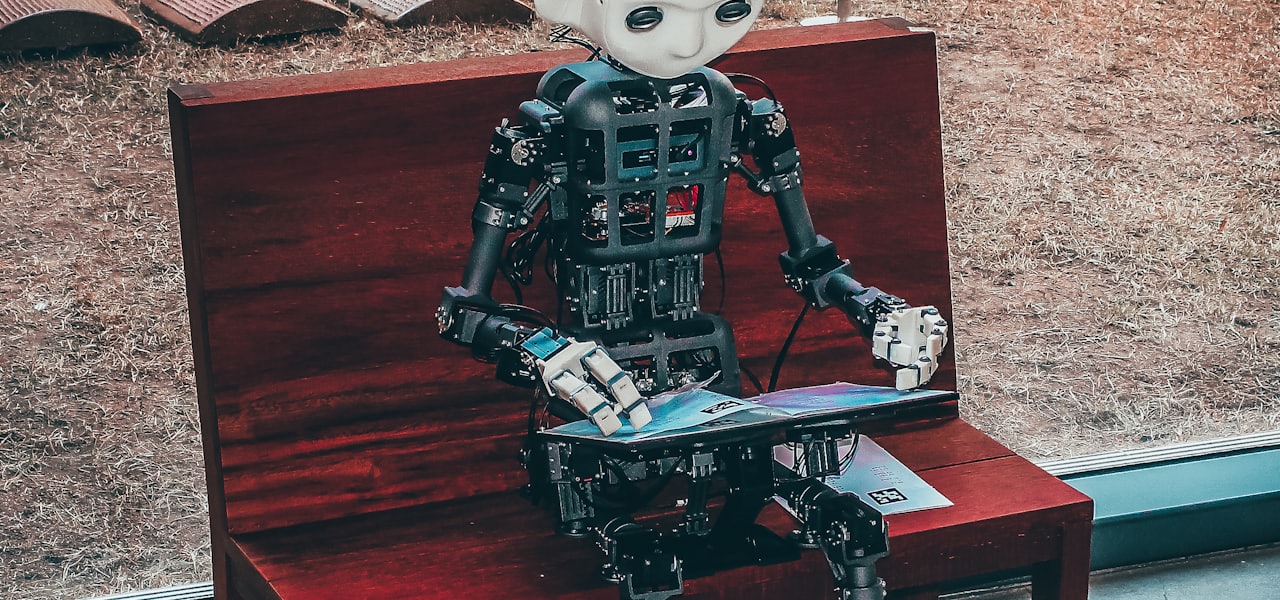
Biohybrid systems refer to the integration of biological materials, such as cells or tissues, with artificial components, including electronics or mechanical structure. This combination incorporates the capabilities of living organisms with the precision of man-made technology. As a result, these systems perform tasks that neither biology nor machines could achieve independently. Biohybrid systems might use lab-cultured muscle cells to power small robots or combine sensors with living tissue for better health sensing. The intent behind these systems is to combine the benefits of biological and technological components to introduce new solutions for complex medical challenges. Biohybrid systems may have transformative potential across sectors, such as robotics to create actuators and sensors that mimic natural muscle and nerve function, medicine in developing smart implants and drug delivery systems, in prosthetics for enhancing user control through neural or muscular interfaces and environmental sustainability for deploying biohybrid solutions for pollution sensing or remediation. == Origin == The term "biohybrid" is a compound of "bio" from biology (meaning life) and "hybrid" (referring to a combination of distinct elements), denoting a field of study. Its use helps distinguish such systems from purely biological constructs or entirely synthetic machines. Early academic mentions may include bio actuated robotics papers and foundational tissue-robot integration studies published in journals like Nature Biotechnology or Science Robotics. The emergence of the term reflects a growing recognition of the need to describe systems that do not fit cleanly into traditional categories. == Design principles == One of the most significant biohybrid challenges is to engineer interfaces between living tissue and artificial materials that are efficient. This means having precise control over adhesion at the surface, diffusion of nutrients, and signal conduction. Actuation mechanisms within the heart of these systems generate movement or mechanical response. These may be in the form of living muscle cells such as skeletal myocytes or cardiomyocytes, soft pneumatic actuators, or electrical stimulation-responsive tissues. Materials selection is equally critical. Hydrogels, elastomers like PDMS (polydimethylsiloxane), and biopolymers are commonly used due to their softness and biocompatibility. These materials must support cell viability, resist immune attack, and allow the integration of mechanical or electrical components. == Key components == At their core, biohybrid systems work by bridging living biological parts with technology. Through this integration, functionality that neither system could accomplish singularly is possible. Biological parts may be cells, tissues, or even organs—occasionally cultured in a laboratory setting. These biological parts carry out biologically inspired behaviors, such as muscle contraction or chemical sensing in the body. Technological components may constitute devices like sensors, electronic components, and mechanical structure. These manipulate the system, supply power, or transfer data. An example is a sensor that is implantable within a body and detects glucose levels as it sends information to a smart phone. By integrating these artificial and biological parts, biohybrid systems can perform advanced functions, such as tissue regeneration, real-time health monitoring, or the recovery of motor function in paralysis patients. Biohybrid systems generally consist of two major components: the biological and the mechanical. Biological components may include muscle cells for contraction, endothelial cells for vascularization, and stem cells for regenerative capabilities. Mechanical components comprise soft actuators that mimic organic motion, synthetic scaffolds that provide support and structure, and microfluidic systems that facilitate the delivery of nutrients and removal of waste. These components are combined in a manner that allows for dynamic, lifelike behavior—such as the contraction of tissue or the propagation of mechanical waves—while maintaining biocompatibility and durability. == Applications == The range of applications for biohybrid systems is broad and continuously expanding. In robotics, biohybrid structures have been used to engineer microscopic, muscle-driven machines, such as Harvard University's biohybrid stingray robot. In medical applications, they offer new alternatives for organ repair and augmentation, including biohybrid heart valves and esophageal scaffolds. Biohybrids are also promising in neural interfaces, where the goal is to create long-lasting, stable interaction between mechanical devices and brain tissue. Muscle-actuated drug response platforms are under exploration in pharmacology for modelling and real-time screening. == Examples == Several high-profile research projects have demonstrated the potential of biohybrid systems: Harvard researchers developed a biohybrid swimming ray powered by rat cardiac cells layered onto a gold skeleton, mimicking the motion of a real stingray. At the Massachusetts Institute of Technology, a cardiac pump actuated entirely by living heart muscle cells was engineered to simulate the behavior of a beating heart. Bio actuated soft robots have been built to simulate gut peristalsis, using muscle contractions to replicate natural wave-like movement in the digestive tract. == Challenges and limitations == As with many technologies that involve living systems, biohybrid systems raise important ethical and biomedical questions. Cell sourcing remains a key issue, particularly when embryonic or animal-derived cells are used. Long-term viability is another concern—living tissues must be kept alive with nutrients and oxygen, and they often degrade or elicit immune responses when implanted. Powering these biological parts presents logistical and ethical hurdles as well. Systems must either include internal mechanisms for nutrient delivery or be supported externally, which can limit portability and independence. == Future directions == Researchers are exploring self-directed, self-regulated organ substitutes and regenerative implants that can respond to their surroundings in real-time. These systems may be integrated with artificial intelligence to make them adjust to stimuli and coordinate complex behaviors. Future potential applications are wearable biohybrid systems for rehabilitation, space medicine devices for long-duration missions, and implantable devices that integrate into human physiology.
Smart object
A smart object is an object that enhances the interaction with not only people but also with other smart objects. Also known as smart connected products or smart connected things (SCoT), they are products, assets and other things embedded with processors, sensors, software and connectivity that allow data to be exchanged between the product and its environment, manufacturer, operator/user, and other products and systems. Connectivity also enables some capabilities of the product to exist outside the physical device, in what is known as the product cloud. The data collected from these products can be then analysed to inform decision-making, enable operational efficiencies and continuously improve the performance of the product. It can not only refer to interaction with physical world objects but also to interaction with virtual (computing environment) objects. A smart physical object may be created either as an artifact or manufactured product or by embedding electronic tags such as RFID tags or sensors into non-smart physical objects. Smart virtual objects are created as software objects that are intrinsic when creating and operating a virtual or cyber world simulation or game. The concept of a smart object has several origins and uses, see History. There are also several overlapping terms, see also smart device, tangible object or tangible user interface and Thing as in the Internet of things. == History == In the early 1990s, Mark Weiser, from whom the term ubiquitous computing originated, referred to a vision "When almost every object either contains a computer or can have a tab attached to it, obtaining information will be trivial", Although Weiser did not specifically refer to an object as being smart, his early work did imply that smart physical objects are smart in the sense that they act as digital information sources. Hiroshi Ishii and Brygg Ullmer refer to tangible objects in terms of tangibles bits or tangible user interfaces that enable users to "grasp & manipulate" bits in the center of users' attention by coupling the bits with everyday physical objects and architectural surfaces. The smart object concept was introduced by Marcelo Kallman and Daniel Thalmann as an object that can describe its own possible interactions. The main focus here is to model interactions of smart virtual objects with virtual humans, agents, in virtual worlds. The opposite approach to smart objects is 'plain' objects that do not provide this information. The additional information provided by this concept enables far more general interaction schemes, and can greatly simplify the planner of an artificial intelligence agent. In contrast to smart virtual objects used in virtual worlds, Lev Manovich focuses on physical space filled with electronic and visual information. Here, "smart objects" are described as "objects connected to the Net; objects that can sense their users and display smart behaviour". More recently in the early 2010s, smart objects are being proposed as a key enabler for the vision of the Internet of things. The combination of the Internet and emerging technologies such as near field communications, real-time localization, and embedded sensors enables everyday objects to be transformed into smart objects that can understand and react to their environment. Such objects are building blocks for the Internet of things and enable novel computing applications. In 2018, one of the world's first smart houses was built in Klaukkala, Finland in the form of a five-floor apartment block, using the Kone Residential Flow solution created by KONE, allowing even a smartphone to act as a home key. == Characteristics == Although we can view interaction with physical smart object in the physical world as distinct from interaction with virtual smart objects in a virtual simulated world, these can be related. Poslad considers the progression of: how humans use models of smart objects situated in the physical world to enhance human to physical world interaction; versus how smart physical objects situated in the physical world can model human interaction in order to lessen the need for human to physical world interaction; versus how virtual smart objects by modelling both physical world objects and modelling humans as objects and their subsequent interactions can form a predominantly smart virtual object environment. === Smart physical objects === The concept smart for a smart physical object simply means that it is active, digital, networked, can operate to some extent autonomously, is reconfigurable and has local control of the resources it needs such as energy, data storage, etc. Note, a smart object does not necessarily need to be intelligent as in exhibiting a strong essence of artificial intelligence—although it can be designed to also be intelligent. Physical world smart objects can be described in terms of three properties: Awareness: is a smart object's ability to understand (that is, sense, interpret, and react to) events and human activities occurring in the physical world. Representation: refers to a smart object's application and programming model—in particular, programming abstractions. Interaction: denotes the object's ability to converse with the user in terms of input, output, control, and feedback. Based upon these properties, these have been classified into three types: Activity-Aware Smart Objects: Are objects that can record information about work activities and its own use. Policy-Aware Smart Objects: Are objects that are activity-aware Objects can interpret events and activities with respect to predefined organizational policies. Process-Aware Smart Objects: Processes play a fundamental role in industrial work management and operation. A process is a collection of related activities or tasks that are ordered according to their position in time and space. === Smart virtual objects === For the virtual object in a virtual world case, an object is called smart when it has the ability to describe its possible interactions. This focuses on constructing a virtual world using only virtual objects that contain their own interaction information. There are four basic elements to constructing such a smart virtual object framework. Object properties: physical properties and a text description Interaction information: position of handles, buttons, grips, and the like Object behavior: different behaviors based on state variables Agent behaviors: description of the behavior an agent should follow when using the object Some versions of smart objects also include animation information in the object information, but this is not considered to be an efficient approach, since this can make objects inappropriately oversized. === Categorization === The terms smart, connected product or smart product can be confusing as it is used to cover a broad range of different products, ranging from smart home appliances (e.g., smart bathroom scales or smart light bulbs) to smart cars (e.g., Tesla). While these products share certain similarities, they often differ substantially in their capabilities. Raff et al. developed a conceptual framework that distinguishes different smart products based on their capabilities, which features 4 types of smart product archetypes (in ascending order of "smartness"). Digital Connected Responsive Intelligent == Advantages == Smart, connected products have three primary components: Physical – made up of the product's mechanical and electrical parts. Smart – made up of sensors, microprocessors, data storage, controls, software, and an embedded operating system with enhanced user interface. Connectivity – made up of ports, antennae, and protocols enabling wired/wireless connections that serve two purposes, it allows data to be exchanged with the product and enables some functions of the product to exist outside the physical device. Each component expands the capabilities of one another resulting in "a virtuous cycle of value improvement". First, the smart components of a product amplify the value and capabilities of the physical components. Then, connectivity amplifies the value and capabilities of the smart components. These improvements include: Monitoring of the product's conditions, its external environment, and its operations and usage. Control of various product functions to better respond to changes in its environment, as well as to personalize the user experience. Optimization of the product's overall operations based on actual performance data, and reduction of downtimes through predictive maintenance and remote service. Autonomous product operation, including learning from their environment, adapting to users' preferences and self-diagnosing and service. === The Internet of things (IoT) === The Internet of things is the network of physical objects that contain embedded technology to communicate and sense or interact with their internal states or the external environment. The phrase "Internet of things" reflects the gro
Hugging Face
Hugging Face, Inc., is an American company based in New York City that develops computation tools for building applications using machine learning. Its transformers library built for natural language processing applications and its platform allow users to share machine learning models and datasets and showcase their work. == History == === Founding === The company was founded in 2016 by French entrepreneurs Clément Delangue, Julien Chaumond, and Thomas Wolf in New York City, originally as a company that developed a chatbot app targeted at teenagers. The company was named after the U+1F917 🤗 HUGGING FACE emoji. After open sourcing the model behind the chatbot, the company pivoted to focus on being a platform for machine learning. === AI boom === On April 28, 2021, the company launched the BigScience Research Workshop in collaboration with several other research groups to release an open large language model. In 2022, the workshop concluded with the announcement of BLOOM, a multilingual large language model with 176 billion parameters. In February 2023, the company announced partnership with Amazon Web Services (AWS) which would allow Hugging Face's products to be available to AWS customers to use them as the building blocks for their custom applications. The company also said the next generation of BLOOM will be run on Trainium, a proprietary machine learning chip created by AWS. In June 2024, the company announced, along with Meta and Scaleway, their launch of a new AI accelerator program for European startups. The initiative aimed to help startups integrate open foundation models into their products, accelerating the EU AI ecosystem. The program, based at STATION F in Paris, ran from September 2024 to February 2025. Selected startups received mentoring, and access to AI models and tools and Scaleway's computing power. On September 23, 2024, to further the International Decade of Indigenous Languages, Hugging Face teamed up with Meta and UNESCO to launch a new online language translator. It was built on Meta's No Language Left Behind open-source AI model, enabling free text translation across 200 languages, including many low-resource languages. In April 2025, Hugging Face announced that they acquired a humanoid robotics startup, Pollen Robotics, based in France and founded by Matthieu Lapeyre and Pierre Rouanet in 2016. In an X tweet, Delangue shared his vision to "make Artificial Intelligence robotics Open Source". === Cyberattacks === In early 2026, hackers hijacked the Hugging Face platform to launch Android-targeted attacks involving "powerful malware" which could completely take over a compromised target.
Kolmogorov–Arnold Networks
Kolmogorov–Arnold Networks (KANs) are a type of artificial neural network architecture inspired by the Kolmogorov–Arnold representation theorem, also known as the superposition theorem. Unlike traditional multilayer perceptrons (MLPs), which rely on fixed activation functions and linear weights, KANs replace each weight with a learnable univariate function, often represented using splines. == History == KANs (Kolmogorov–Arnold Networks) were proposed by Liu et al. (2024) as a generalization of the Kolmogorov–Arnold representation theorem (KART), aiming to outperform MLPs in small-scale AI and scientific tasks. Before KANs, numerous studies explored KART's connections to neural networks or used it as a basis for designing new network architectures. In the 1980s and 1990s, early research applied KART to neural network design. Kůrková et al. (1992), Hecht-Nielsen (1987), and Nees (1994) established theoretical foundations for multilayer networks based on KART. Igelnik et al. (2003) introduced the Kolmogorov Spline Network using cubic splines to model complex functions. Sprecher (1996, 1997) introduced numerical methods for building network layers, while Nakamura et al. (1993) created activation functions with guaranteed approximation accuracy. These works linked KART's theoretical potential with practical neural network implementation. KART has also been used in other computational and theoretical fields. Coppejans (2004) developed nonparametric regression estimators using B-splines, Bryant (2008) applied it to high-dimensional image tasks, Liu (2015) investigated theoretical applications in optimal transport and image encryption, and more recently, Polar and Poluektov (2021) used Urysohn operators for efficient KART construction, while Fakhoury et al. (2022) introduced ExSpliNet, integrating KART with probabilistic trees and multivariate B-splines for improved function approximation. == Architecture == KANs are based on the Kolmogorov–Arnold representation theorem, which was linked to the 13th Hilbert problem. Given x = ( x 1 , x 2 , … , x n ) {\displaystyle x=(x_{1},x_{2},\dots ,x_{n})} consisting of n variables, a multivariate continuous function f ( x ) {\displaystyle f(x)} can be represented as: f ( x ) = f ( x 1 , … , x n ) = ∑ q = 1 2 n + 1 Φ q ( ∑ p = 1 n φ q , p ( x p ) ) {\displaystyle f(x)=f(x_{1},\dots ,x_{n})=\sum _{q=1}^{2n+1}\Phi _{q}\left(\sum _{p=1}^{n}\varphi _{q,p}(x_{p})\right)} (1) This formulation contains two nested summations: an outer and an inner sum. The outer sum ∑ q = 1 2 n + 1 {\displaystyle \sum _{q=1}^{2n+1}} aggregates 2 n + 1 {\displaystyle 2n+1} terms, each involving a function Φ q : R → R {\displaystyle \Phi _{q}:\mathbb {R} \to \mathbb {R} } . The inner sum ∑ p = 1 n {\displaystyle \sum _{p=1}^{n}} computes n terms for each q, where each term φ q , p : [ 0 , 1 ] → R {\displaystyle \varphi _{q,p}:[0,1]\to \mathbb {R} } is a continuous function of the single variable x p {\displaystyle x_{p}} . The inner continuous functions φ q , p {\displaystyle \varphi _{q,p}} are universal, independent of f {\displaystyle f} , while the outer functions Φ q {\displaystyle \Phi _{q}} depend on the specific function f {\displaystyle f} being represented. The representation (1) holds for all multivariate functions f {\displaystyle f} as proved in . If f {\displaystyle f} is continuous, then the outer functions Φ q {\displaystyle \Phi _{q}} are continuous; if f {\displaystyle f} is discontinuous, then the corresponding Φ q {\displaystyle \Phi _{q}} are generally discontinuous, while the inner functions φ q , p {\displaystyle \varphi _{q,p}} remain the same universal functions. Liu et al. proposed the name KAN. A general KAN network consisting of L layers takes x to generate the output as: K A N ( x ) = ( Φ L − 1 ∘ Φ L − 2 ∘ ⋯ ∘ Φ 1 ∘ Φ 0 ) x {\displaystyle \mathrm {KAN} (x)=(\Phi ^{L-1}\circ \Phi ^{L-2}\circ \cdots \circ \Phi ^{1}\circ \Phi ^{0})x} (3) Here, Φ l {\displaystyle \Phi ^{l}} is the function matrix of the l-th KAN layer or a set of pre-activations. Let i denote the neuron of the l-th layer and j the neuron of the (l+1)-th layer. The activation function φ j , i l {\displaystyle \varphi _{j,i}^{l}} connects (l, i) to (l+1, j): φ j , i l , l = 0 , … , L − 1 , i = 1 , … , n l , j = 1 , … , n l + 1 {\displaystyle \varphi _{j,i}^{l},\quad l=0,\dots ,L-1,\;i=1,\dots ,n_{l},\;j=1,\dots ,n_{l+1}} (4) where nl is the number of nodes of the l-th layer. Thus, the function matrix Φ l {\displaystyle \Phi ^{l}} can be represented as an n l + 1 × n l {\displaystyle n_{l+1}\times n_{l}} matrix of activations: x l + 1 = ( φ 1 , 1 l ( ⋅ ) φ 1 , 2 l ( ⋅ ) ⋯ φ 1 , n l l ( ⋅ ) φ 2 , 1 l ( ⋅ ) φ 2 , 2 l ( ⋅ ) ⋯ φ 2 , n l l ( ⋅ ) ⋮ ⋮ ⋱ ⋮ φ n l + 1 , 1 l ( ⋅ ) φ n l + 1 , 2 l ( ⋅ ) ⋯ φ n l + 1 , n l l ( ⋅ ) ) x l {\displaystyle x^{l+1}={\begin{pmatrix}\varphi _{1,1}^{l}(\cdot )&\varphi _{1,2}^{l}(\cdot )&\cdots &\varphi _{1,n_{l}}^{l}(\cdot )\\\varphi _{2,1}^{l}(\cdot )&\varphi _{2,2}^{l}(\cdot )&\cdots &\varphi _{2,n_{l}}^{l}(\cdot )\\\vdots &\vdots &\ddots &\vdots \\\varphi _{n_{l+1},1}^{l}(\cdot )&\varphi _{n_{l+1},2}^{l}(\cdot )&\cdots &\varphi _{n_{l+1},n_{l}}^{l}(\cdot )\end{pmatrix}}x^{l}} == Implementations == To make the KAN layers optimizable, the inner function is formed by the combination of spline and basic functions as the formula: φ ( x ) = w b b ( x ) + w s spline ( x ) {\displaystyle \varphi (x)=w_{b}\,b(x)+w_{s}\,{\text{spline}}(x)} where b ( x ) {\displaystyle b(x)} is the basic function, usually defined as s i l u ( x ) = x / ( 1 + e x ) {\displaystyle silu(x)=x/(1+e^{x})} and w b {\displaystyle w_{b}} is the base weight matrix. Also, w s {\displaystyle w_{s}} is the spline weight matrix and spline ( x ) {\displaystyle {\text{spline}}(x)} is the spline function. The spline function can be a sum of B-splines. spline ( x ) = ∑ i c i B i ( x ) {\displaystyle {\text{spline}}(x)=\sum _{i}c_{i}B_{i}(x)} Many studies suggested to use other polynomial and curve functions instead of B-spline to create new KAN variants. == Functions used == The choice of functional basis strongly influences the performance of KANs. Common function families include: B-splines: Provide locality, smoothness, and interpretability; they are the most widely used in current implementations. RBFs (include Gaussian RBFs): Capture localized features in data and are effective in approximating functions with non-linear or clustered structures. Chebyshev polynomials: Offer efficient approximation with minimized error in the maximum norm, making them useful for stable function representation. Rational function: Useful for approximating functions with singularities or sharp variations, as they can model asymptotic behavior better than polynomials. Fourier series: Capture periodic patterns effectively and are particularly useful in domains such as physics-informed machine learning. Wavelet functions (DoG, Mexican hat, Morlet, and Shannon): Used for feature extraction as they can capture both high-frequency and low-frequency data components. Piecewise linear functions: Provide efficient approximation for multivariate functions in KANs. == Usage == In some modern neural architectures like convolutional neural networks (CNNs), recurrent neural networks (RNNs), and Transformers, KANs are typically used as drop-in substitutes for MLP layers. Despite KANs' general-purpose design, researchers have created and used them for a number of tasks: Scientific machine learning (SciML): Function fitting, partial differential equations (PDEs) and physical/mathematical laws. Continual learning: KANs better preserve previously learned information during incremental updates, avoiding catastrophic forgetting due to the locality of spline adjustments. Graph neural networks: Extensions such as Kolmogorov–Arnold Graph Neural Networks (KA-GNNs) integrate KAN modules into message-passing architectures, showing improvements in molecular property prediction tasks. Sensor data processing: Kolmogorov–Arnold Networks (KANs) have recently been applied to sensor data processing due to their ability to model complex nonlinear relationships with relatively few parameters and improved interpretability compared to conventional multilayer perceptrons. Applications include industrial soft sensors, biomedical signal analysis, remote sensing, and environmental monitoring systems. == Drawbacks == KANs can be computationally intensive and require a large number of parameters due to their use of polynomial functions to capture data.
Compute (machine learning)
In machine learning and deep learning, compute is the amount of computing power or computational resources required to train machine learning models and large language models. More broadly, compute is the computational power or resources necessary for a computer or computer program to function. == Definition == Compute is commonly defined as the amount of computing power or computational resources required to train machine learning and large language models. The term "compute" has also been more broadly applied to cloud computing, referencing processing power, memory, networking, storage, and other resources required for the computation of any program. Compute is measured in petaflop/s-days and is used to document AI training. A petaflop/s-day (pfs-day) consists of performing 1015 neural net operations per second for one day, or a total of about 1020 operations. The compute-time product serves as a mental convenience, similar to kilowatt-hour for energy. An amount of compute is meant to give an idea of the number of actual operations performed. == History == In a 2018 analysis titled "AI and compute", artificial intelligence company OpenAI introduced the concept of compute. OpenAI identified two eras of training AI systems in terms of compute-usage. From 1959 to 2012, compute roughly followed Moore’s law. Between 2012 and 2018, the amount of compute used in the largest AI training runs increased exponentially, growing by more than 300,000 times — roughly doubling every 3.4 months. By comparison, Moore’s Law doubled every two years over the same period. One of the largest models, released in 2020, used 600,000 times more computing power than the 2012 model. After 2020, compute growth began to slow down, with the compute needed for the largest AI models continuing to slow down in 2023. The notion of compute has become increasingly used from the mid-2020s onwards. == Compute growth and AI progress == Larger AI models trained on more data and using more computational resources, tend to perform better. This happens even if the algorithms themselves remain unchanged. As early as 2018, OpenAI noted the exponential increase in compute to be have a key role in AI progress. OpenAI considers three factors drive the advance of AI: algorithmic innovation, data, and the amount of compute available for training. AI models with more compute not only improve in the tasks they were trained on but can develop emergent abilities. Incremental improvements can lead to more abrupt leaps in capabilities. AI provider SpaceXAI said in 2026 that their AI progress is driven by compute and used it a key metric in the AI training of its supercomputer Colossus, the which contains 1 million GPUs. Anthropic has a contract of $1.25 billion per month with SpaceXAI to buy all the compute capacity at Colossus 1 data center. === Criticism and policy === Increasing, promoting or constraining progress in artificial intelligence has often be done via controlling the amount of compute. Policymarkers have enacted policies and provided support to make compute resources more accessible to domestic AI researchers. In a January 2022 report, the Center for Security and Emerging Technology (CSET) suggested to institutions that increasingly powerful and generalizable AI (AGI) will likely require other strategies than maximizing compute. Some AI researchers are also concerned that government might exclusively focus on scaling compute instead of other strategies. The CSET has reported on the various bottlenecks which could explain why deep learning needs for compute have slow down: training is expensive and training extremely large models generates traffic jams across many processors that are difficult to manage. there is a limited supply of AI chips (see AI chip memory shortage). CSET advances that the main resource is human capital, specifically talented researchers — according to a 2023 published survey of more than 400 AI researchers, academic and private sector workers. The survey found that AI researchers are not primarily or exclusively constrained by compute access. However, both academic and industry AI researchers equally report concerns that insufficient compute could prevent them from contributing meaningfully to AI research in the future. High compute users are more concerned about compute access. When asked about which resource provided by the government would be the most useful to them, some AI researchers select compute, other prefer grant funding. For this goal, CSET advised policymakers to ensure that even researchers with smaller budgets could effectively contribute to AI research. Other proposed strategies include using contemporary AI algorithms, managing modern AI infrastructure or focusing on interdisciplinary work between the AI field and other fields of computer science. A 2024 study on compute access found that academic-only AI research teams often have less compute intensive research topics, especially foundation models, compared to industry AI labs. As a consequence, academia is likely to play a smaller role in advancing such techniques. The researchers suggest nationally-sponsored computing infrastructure as well as open science initiatives to boost academic compute access. === Data === A 2022 study found that current large language models are significantly under-trained, a consequence of focusing on scaling language models whilst keeping the amount of training data constant. By training over 400 language models of various parameter and token size, they found that "for compute-optimal training", the model size and the number of training tokens should ideally be scaled equally: for every doubling of model size the number of training tokens should also be doubled.